






When it comes to dental health and aesthetics, a healthy oral structure depends not only on strong teeth but also on a strong jawbone. However, tooth loss, gum disease, trauma, or prolonged periods with missing teeth can cause the jawbone to gradually lose volume and deteriorate. This can pose a significant challenge, particularly for people considering dental implants. So, what can be done when there is insufficient jawbone? This is where dental bone grafting comes into play. Frequently used in modern dentistry, this procedure is an important treatment option that aims to restore jawbone volume and support.

What Is Dental Bone Grafting?
Dental bone grafting is a surgical procedure performed to address bone loss in the jaw and increase bone volume. The procedure may involve grafting materials derived from the patient’s own bone, animal sources, human donors, or synthetic materials. The graft material acts as a scaffold that supports new bone formation. Over time, new bone tissue may develop in the area through the body’s natural healing process. Particularly in patients who do not have sufficient bone volume before dental implant treatment, bone grafting can help enable healthy and secure implant placement.
Why Is Dental Bone Grafting Performed?
The jawbone is an important tissue that supports tooth roots and maintains the integrity of the oral structure. Following tooth loss, the bone in the affected area may gradually deteriorate.
The main purposes of dental bone grafting include:
- Increasing insufficient bone volume for dental implant treatment.
- Reducing potential bone loss after tooth extraction.
- Supporting existing cavities and bone defects in the jawbone.
- Helping treat bone loss caused by gum disease.
- Rebuilding bone support around dental implants.
- Repairing certain types of bone loss in the mouth and jaw.
Who May Need Dental Bone Grafting?
Dental bone grafting is not a routine procedure for every patient. Treatment is planned after assessing the patient’s oral and jaw anatomy, bone density, and available bone volume.
Dental bone grafting may be recommended particularly for:
People who want dental implants but have insufficient bone volume
For dental implant treatment to be successful, there must be sufficient bone support in the area where the implant will be placed. If bone volume is inadequate, bone grafting may be performed before implant placement.
People who lost a tooth a long time ago
After tooth loss, the jawbone may gradually lose volume. In areas where teeth have been missing for a long time, the remaining bone may become insufficient for dental implant treatment.
People with advanced gum disease
Advanced gum disease, known as periodontitis, can cause loss of the bone tissue supporting the teeth. In suitable cases, bone grafting may help support the regeneration of lost bone tissue.
People at risk of bone loss after tooth extraction
After certain tooth extractions, a bone graft may be placed in the extraction socket to help preserve bone volume in the area. This is particularly important in areas where dental implants are planned for the future.
People with jawbone loss caused by trauma or other factors
Certain defects in the jawbone resulting from accidents, trauma, cyst removal, or other surgical procedures may be supported with bone grafts.
How Is Dental Bone Grafting Performed?
Dental bone grafting is a surgical procedure planned according to the patient’s needs and the extent of bone loss.
Treatment generally involves the following stages:
1. Examination and planning
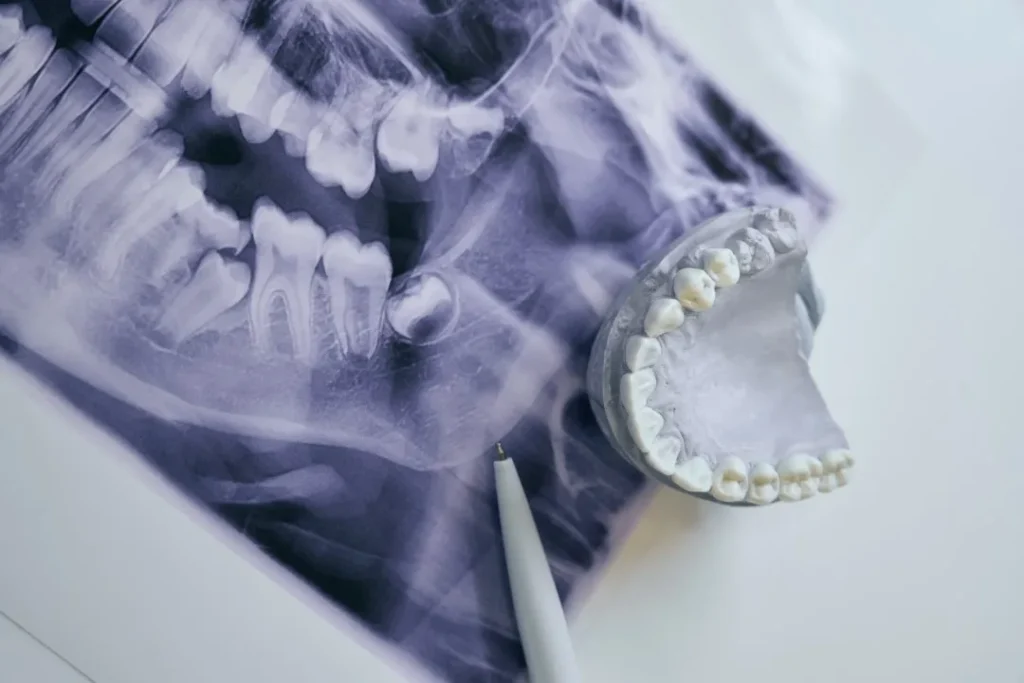
First, the patient’s oral and dental health is assessed. When necessary, panoramic X-rays or three-dimensional cone beam computed tomography (CBCT) scans are used to examine the jawbone structure and the amount of available bone.
2. Preparing the area
The treatment area is numbed with local anaesthesia to prevent pain during the procedure.
3. Placing the bone graft
A suitable bone graft material is placed in the prepared area. When necessary, the graft is covered with a special membrane that helps support bone healing.
4. Suturing and healing
Once the procedure is complete, the area is closed with sutures. The patient’s healing progress is monitored through regular follow-up appointments.
Bone formation generally takes several months. However, this period may vary depending on the extent of the procedure, the material used, and the individual’s healing capacity.
Is Dental Bone Grafting Painful?
Because dental bone grafting is performed under local anaesthesia, patients generally do not feel pain during the procedure. However, mild pain, swelling, tenderness, and bruising may occur afterwards. These symptoms are usually temporary. Taking prescribed medication, maintaining proper oral care, and attending follow-up appointments support the healing process.
What Should You Pay Attention to After Dental Bone Grafting?
Postoperative care is just as important as the surgical procedure in achieving successful treatment.
During the healing period, patients should follow these recommendations:
- Avoid very hot foods and drinks during the first few days.
- Take prescribed medication as directed.
- Avoid applying pressure to the treated area.
- Avoid spitting and vigorous rinsing during the first few days.
- Do not smoke or use tobacco products.
- Maintain oral hygiene as instructed by your dentist.
- Attend all follow-up appointments.
As smoking can negatively affect bone healing, stopping during the treatment process is particularly important.
When Can Dental Implants Be Placed After Bone Grafting?
One of the most common questions patients ask is how soon dental implant treatment can take place after bone grafting. The answer depends on the amount of bone loss and the surgical technique used. In some suitable cases, bone grafting and implant placement can be performed during the same appointment. However, when bone support is insufficient, bone grafting is performed first, followed by a waiting period of generally several months to allow new bone to form. Once healing is complete, follow-up examinations determine whether dental implant treatment can proceed.
Is Dental Bone Grafting Suitable for Everyone?
Although dental bone grafting can produce successful results in many patients, it may not be suitable for everyone. Active infections, uncontrolled systemic diseases, heavy smoking, and certain health conditions that affect healing may alter the treatment plan. For this reason, the patient’s general health, medications, and oral tissues should be thoroughly evaluated before the procedure.
The First Step Towards Successful Dental Implant Treatment: Sufficient Bone Support
Dental bone grafting is an important surgical procedure that helps address jawbone volume loss and prepare a suitable foundation for dental implant treatment. However, appropriate patient selection, suitable graft material, an experienced dentist, and regular follow-up are essential for a successful outcome. If you are considering dental implants but are unsure whether you have sufficient jawbone, a comprehensive dental examination can help assess your bone structure.
Remember: Healthy, long-lasting dental implant treatment is built on strong bone support and careful planning. We welcome you to our clinic for a detailed consultation, further information, an examination, and pricing details.


